




Together, we can improve brain health and defeat dementia.
Stay Informed, Get Involved: Your Brain Health Journey Starts Here
Do you want the latest information on brain health and opportunities to contribute to important research? The NC Registry for Brain Health shares this directly with you! By joining our registry, you’ll be the first to know about breakthroughs in preventing and treating diseases like Alzheimer’s. You will gain access to information about 14 active research studies in North Carolina.
The NC Registry for Brain Health community has grown to over 14,000 strong since 2019, with members across 100 counties in North Carolina. We are committed to connecting with you, and this past year we shared brain health resources and led educational talks at 155 events.
To be sure that you are receiving all of the NC Registry for Brain Health updates, including our monthly email blasts and quarterly newsletters filled with brain health news, caregiver tips, and upcoming events, be sure to share your email address with us today at NCBrainHealth@duke.edu or by calling (919) 613-8633. This printed newsletter features highlights from our email blasts and newsletters from the past year.
Thank you for being a member of the NC Registry for Brain Health!

IMPROVING BRAIN HEALTH
Understanding Clinical Research
You have likely heard about the exciting advancements in medical care recently. For the first time, treatments that can slow down Alzheimer’s disease have received FDA approval. Plus, there have been breakthroughs in gene therapies for conditions like cystic fibrosis, and doctors are using artificial intelligence to detect cancer earlier and more accurately.
These advances are the direct result of careful clinical research, which is how we learn to fight diseases and to improve healthcare. Clinical research is especially important in our ongoing search for a cure for Alzheimer’s disease and other types of dementia.

 What is clinical research?
In simple terms, clinical research refers to the study of health and illness in people. Clinical research studies:
- Explore the causes of a disease
- Develop better ways to diagnose a condition
- Test new treatments or therapies for a condition
- Learn more about factors that can impact the risk of getting a disease
- Study how diseases affect the health of communities
When we think about clinical research, drug trials may come to mind. However, clinical research includes so much more than these types of studies. There are two main types of clinical research: observational studies and clinical trials. Both cover wide areas and are important to developing treatments and improvements in medical care.
 Observational studies monitor people in normal everyday settings, but do not test a treatment or intervention. This type of research is done to develop new technology, new diagnostic tests, and to uncover factors in our daily life that may increase or decrease the risk of a disease, such as Alzheimer’s disease.
 Clinical trials are research studies that test whether new medical treatments work and are safe. These trials are important because they help us understand if the new treatment or device are better than current ones. These studies also make sure that only safe and effective methods become part of regular medical care, which ultimately leads to better healthcare for everyone. Learn more about clinical research and the different types of research studies at duke.is/NIAClinicalTrials.

Brain Health Podcast Featuring Expert Advice And Real-Life Stories
Brain Talk is a podcast hosted by Deborah Kan, founder of Being Patient, and journalist Mark Niu. They interview experts on brain health and include experiences of real people living with cognitive decline. Their most popular podcasts from the past year can be found on the duke.is/BrainTalk.
Home Safety For Older Adults
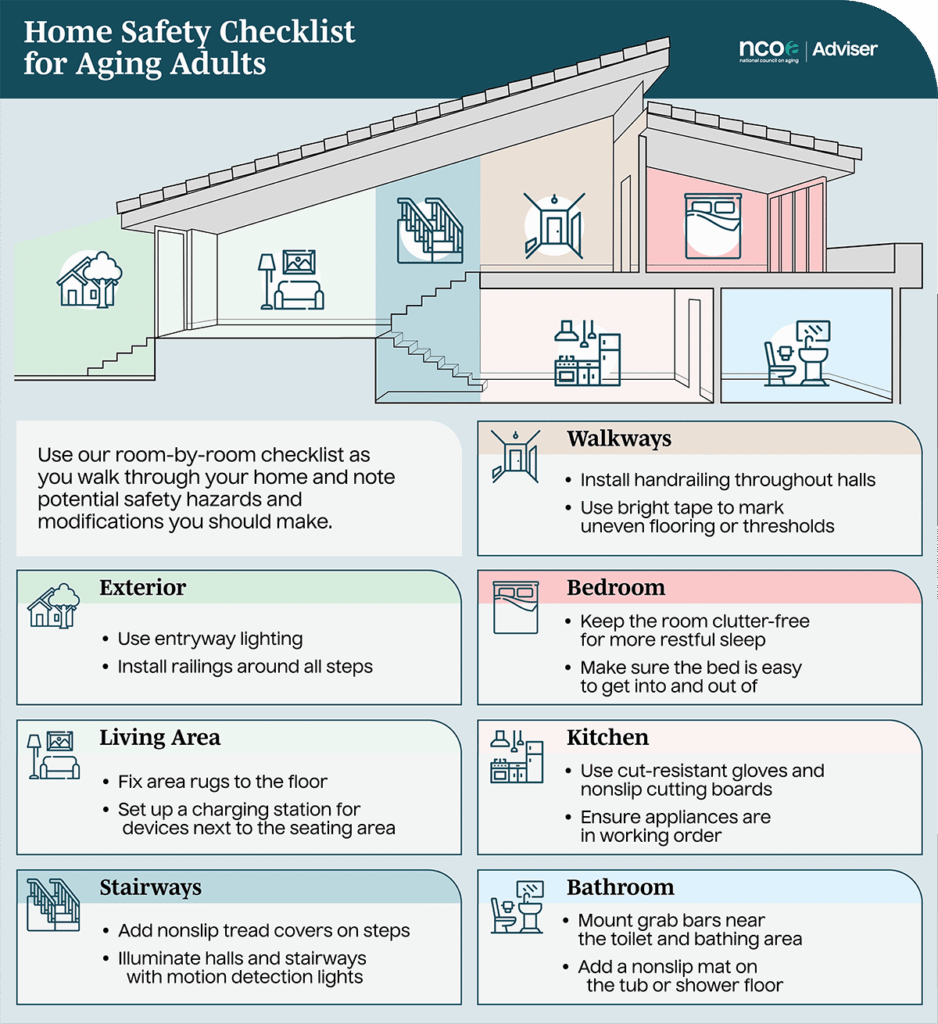
This guide on home safety for older adults from the National Council on Aging features a printable checklist to help you assess your home for risks. With the majority of adults over the age of 50 living in single-family homes, it is important to assess your home’s safety. We encourage you to take a quick “safety stroll” through each room of your home. Keep an eye out for potential fire hazards, tripping dangers, and even places where medications might be mixed-up. The good news? Many of the suggested safety changes cost little and are easy to do yourself!
Learn more about home safety for older adults on the duke.is/HomeSafety.
Free Dementia Care Educational Video Series for NC Care Partners
Dementia Alliance of North Carolina and Positive Approach to Care are offering their Accepting the Challenge dementia education videos online for family care partners across North Carolina. Led by dementia care experts Teepa Snow and Melanie Bunn, this program features:
- 16 on-demand learning modules you can stream anytime, anywhere
- Practical demonstrations and real-world caregiving techniques
- The latest knowledge and insights into dementia care
Take advantage of this amazing opportunity to gain confidence and skills as a caregiver. North Carolina residents can access this resource for free. Learn more and register at duke.is/AcceptingtheChallenge.
Brain Health Resources
The NC Registry for Brain Health has a list of programs that support people with dementia and their caregivers. There are some examples shown below. Connect with each organization to learn more about their programs and events at ncbrainhealth.org/resources/.
Join A Registry Study
The NC Registry connects people with brain health studies. To learn more about these studies and to participate, please visit ncbrainhealth.org/registry-studies, or contact us at NCBrainHealth@duke.edu or (919) 613-8633.
Studies for People with Normal Brain Aging
Cholesterol Medication and Memory
Cognitive Aging Study
Dance and Music Study
Dementia in African Americans
Eyes and Memory Study
Memory and Aging Study
Memory in Latinos
Neuroimaging Memory Study
Sugar and Brain Energy Study
Studies for People with Memory Problems
Caregiver and Patient Perspectives on Care
Cognitive Training and Memory Problems
Dementia in African Americans
Studies for Caregivers
Caregiver Study (online)
Caregiver and Patient Perspectives on Care
Caregiver Well-Being Study
 FIND US ON FACEBOOK! @ncbrainhealth