
New Study Links High-Dose Flu Vaccine to Lower Alzheimer’s Disease Risk

A recent study suggests that getting your yearly flu shot, especially at a higher dose, may help protect your brain health as you age. Researchers studied data from nearly 200,000 adults aged 65 and older and found that those who received a high-dose flu vaccine were less likely to develop Alzheimer’s disease compared to those who received the standard dose. While the regular flu shot lowered Alzheimer’s risk by about 40%, the high-dose version was linked to an even greater reduction (nearly 55%). 

These findings show the strong connection between overall immune health and brain health. As we get older, our immune system naturally weakens, and high-dose vaccines are designed to provide additional protection. Experts say that staying up to date on vaccines may do more than prevent illness; it could also be a simple way to support long-term brain health. 

To read more, visit this link. 

May eblast_high dose flu vaccine

Turn Up the Volume on Brain Health: How Hearing Aids May Ease Dementia Symptoms

We’ve highlighted in the past how important hearing is in keeping your brain healthy. Research shows that hearing loss is quite common among older adults, affecting up to 80%–90% of the population. It can also lead to social isolation, stress, and a lower quality of life. Recent studies have strengthened this connection, especially for people living with dementia. In a large study looking at data from over 10,000 participants from the National Alzheimer's Coordinating Center, researchers found that those with dementia who used hearing aids tended to experience fewer symptoms like depression, anxiety, and agitation. Though, hearing loss on its own wasn’t always linked to more severe behavioral and mood symptoms. This study highlights that addressing hearing loss can be a practical, easy way to improve the well-being of people with dementia.  

To learn more, visit this link.

May eblast_Turn up the volume on brain health (1)

New Gene Found to be Risk Factor for Early Frontotemporal Dementia

Thanks to a large international group of research participants, scientists have discovered a gene called GOLGA8A. This gene may be linked to a rare subtype of frontotemporal dementia (FTD), an early-onset dementia affecting behavior and language. The study shows that differences in this gene could influence how specific parts of the brain develop and work, which might help explain why some people are more likely to develop FTD than others. This finding adds to the growing understanding that genetics play an important role in diseases that affect the brain and nervous system and could lead to earlier detection and more personalized treatment in the future.  

To learn more, visit this link. To access the original scientific article, visit this link. 

New Gene Found to Be a Risk Factor for Early Frontotemporal Dementia

Could a Nasal Swab Help Catch Alzheimer’s Disease Sooner?

Researchers at Duke Health are exploring a simple nasal swab test that may help detect early signs of Alzheimer’s disease before symptoms appear. By analyzing early biological changes in the body, this non-invasive approach could make screening more accessible and improve early diagnosis. While still in development, this promising tool highlights how easier, more accessible approaches may change how we detect and study Alzheimer’s disease in the future. 

To learn more, visit this link.

April eblast_Nasal Swab

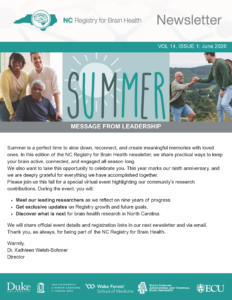
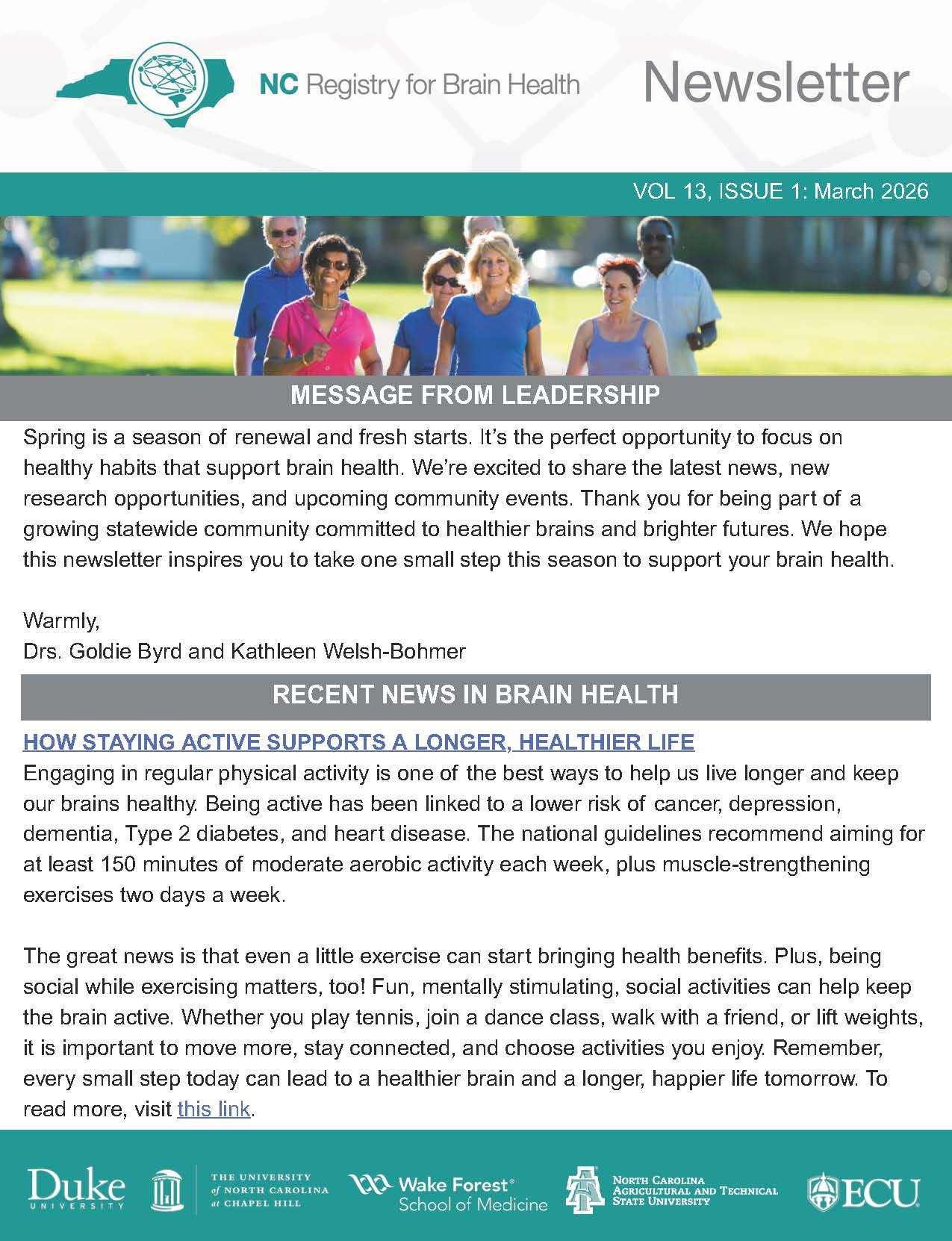
Spring 2026 Newsletter

Learn how to support your brain in the spring edition of the NC Brain Health newsletter. This issue highlights helpful brain health tips, research opportunities, and upcoming community events happening across North Carolina.

Thank you for being part of our community. Your support helps advance brain health research and education throughout the state.

Click here to view the full newsletter and join us on Facebook.

Healthy Eating Promotes Brain Health

A Mediterranean-style diet rich in fruits, vegetables, whole grains, fish, beans, and healthy fats is connected to better brain health. This way of eating can be especially helpful for communities of color, who often experience higher rates of heart and vascular health conditions that can impact the brain. Because this diet can be adapted to many cultural traditions, it offers a flexible and practical way to support both heart and brain health across the lifespan.  

To learn more about the Mediterranean-style diet and its effects on your health, visit the American Heart Association’s website. You can also visit this link to learn more about foods you can eat more regularly to promote brain health. You can take a deeper dive into how diet affects brain health by visiting the American Heart Association’s website. They also have resources to guide you on your healthy eating journey at this link. For healthy recipe ideas, visit this link. 

Feb Eblast_Healthy Eating Promote Brain Health

A Vaccine for Your Brain: Surprising Benefits of the Shingles Shot

A new study offers encouraging news about both brain and immune health. The shingles vaccine, which is already recommended for adults age 50+ to prevent a painful viral infection, may also help lower dementia risk and even slow its progression. Researchers analyzing health data from more than 280,000 older adults in Wales and Australia found that people who received the shingles vaccine were less likely to develop mild cognitive impairment or dementia. Researchers found that, among those already living with dementia, vaccinated individuals had a significantly lower risk of dying over nine years. Scientists believe the vaccine may reduce harmful inflammation in the nervous system or strengthen the immune system, though more research is needed to understand why these benefits occur. While not a guaranteed preventive measure, experts agree that discussing the shingles vaccine with your doctor is a simple, accessible step that may support healthier aging and brain health.

To read more, visit this link.

Jan Eblast_Benefits of the Shingles Shot

The Connection Between Oral Health and the Brain

A new study suggests that adults with gum disease may be more likely to show signs of damage in their brain's white matter, changes linked to memory problems, slower thinking, balance issues, and higher stroke risk. Researchers found that those with gum disease had more white matter hyperintensities on brain scans, even after accounting for age, blood pressure, diabetes, and smoking. While the study does not prove that gum disease causes brain changes, it strengthens growing evidence that oral health and brain health may be connected. Experts note that gum disease can be prevented and treated, and maintaining good dental hygiene is an important step in supporting long-term brain health. 

To learn more, visit this link.

Jan Eblast_Connection between oral health and the brain

Winter 2025 Newsletter

The winter’s edition of the NC Registry for Brain Health newsletter highlights a year of significant progress in Alzheimer’s disease research and healthy aging. In this issue, you’ll find:

  • Highlights of scientific breakthroughs in Alzheimer’s disease, including the FDA’s approval of the first simple blood test for Alzheimer’s biomarkers
  • Practical guidance on preventing falls and an overview of new technologies that help older adults stay safer and more active, even during colder months!
  • Tips for caregivers navigating a stressful holiday season, plus links to healthy recipes
  • Upcoming community events

Thank you for your valuable partnership and ongoing support of brain health research. Your involvement makes a difference and helps move this important work forward.

Click here to view the full newsletter and join us on Facebook.


Junk Food and the Brain: A Recipe for Memory Loss

A recent study by researchers at UNC Health shows that eating too much processed and high-fat "junk food" impacts your brain health. Researchers studied mice on a high-fat diet of fast foods, chips, and sugary snacks. In only four days, they noticed the mice were experiencing faster cognitive decline and memory issues.

The good news is that choosing healthier foods—such as vibrant fruits, crunchy vegetables, lean proteins, and hearty whole grains—can help protect your brain.

To learn more, visit this link.

Nov Eblast_Junk food and the brain