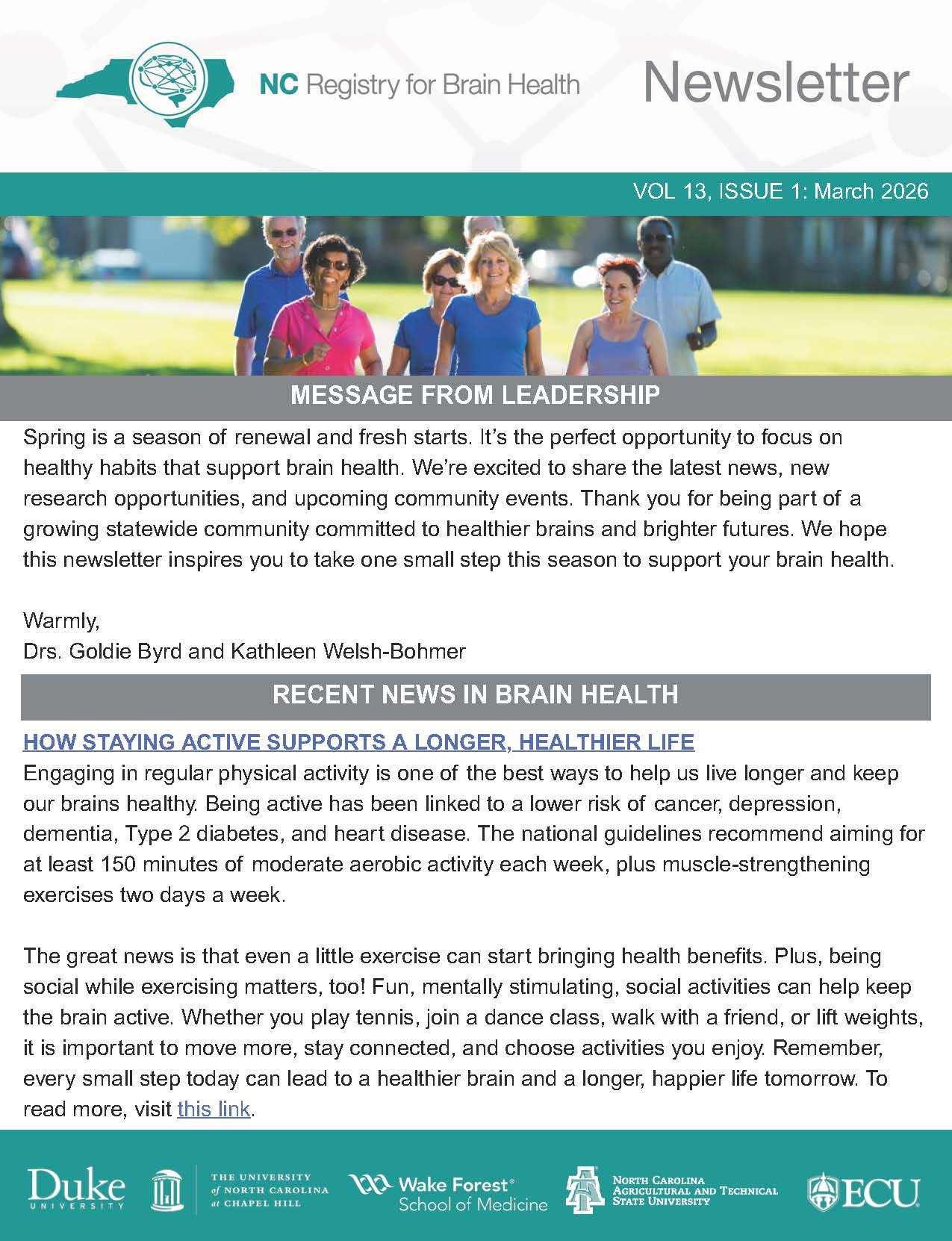
Spring 2026 Newsletter

Learn how to support your brain in the spring edition of the NC Brain Health newsletter. This issue highlights helpful brain health tips, research opportunities, and upcoming community events happening across North Carolina.

Thank you for being part of our community. Your support helps advance brain health research and education throughout the state.

Click here to view the full newsletter and join us on Facebook.

Study Highlight – Music Therapy for Caregivers of People with Parkinson’s Disease

Many of you emailed us asking how to get involved in research. All our supported studies can be found on our website under the Registry Studies tab. We plan to share a research study each month. This month, we are highlighting the latest study: Music Therapy for Caregivers of People with Parkinson’s Disease (MY CARE TO TAKE CARE RESEARCH STUDY), a four-week online study on music therapy and mindful movement for care partners of people with Parkinson’s disease. If you are interested in participating, please fill out the Studies Interest Form at this link.

Feb Eblast_Study Highlight

Caregiving by the Numbers – Part 2

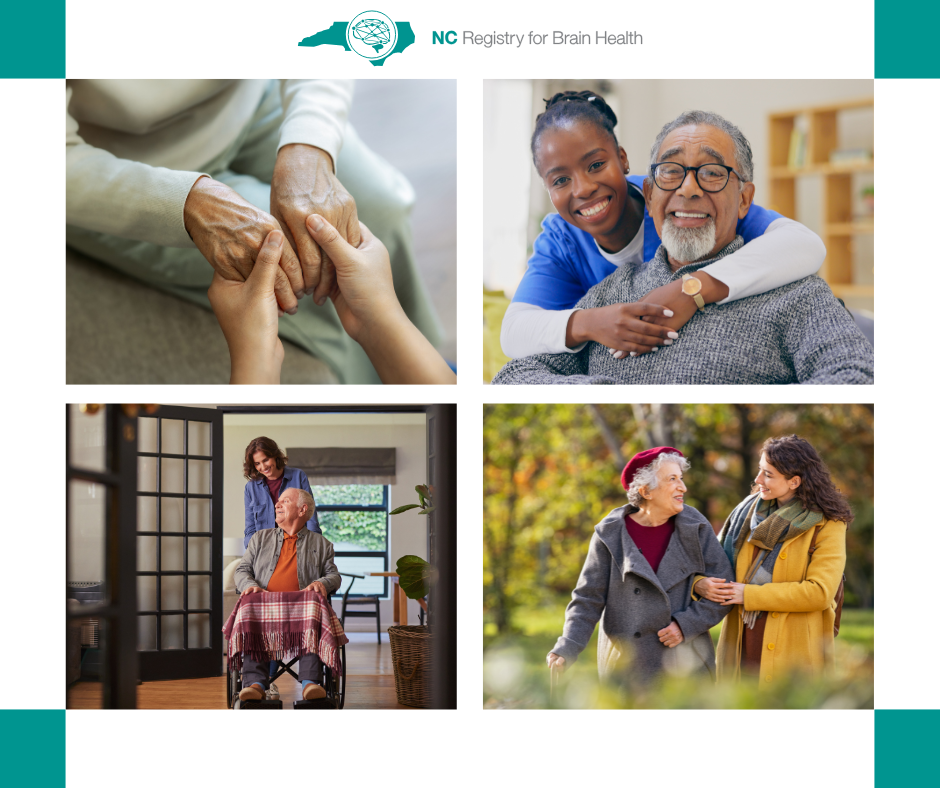
Last month, we provided you with the 2025 Caregiving in the U.S. Report statistics. This month, we share the North Carolina report. In our state, over a third (38%) of caregivers have been providing care for three or more years. Understandably, many caregivers feel unprepared and overwhelmed. This report highlights the importance of better access to caregiver resources, flexible work options, financial support, and easily accessible community services. Strengthening support for caregivers is vital to the health and well-being of families and communities. 

To read the North Carolina report, visit this link. 

Feb Eblast_Caregiving by the Numbers

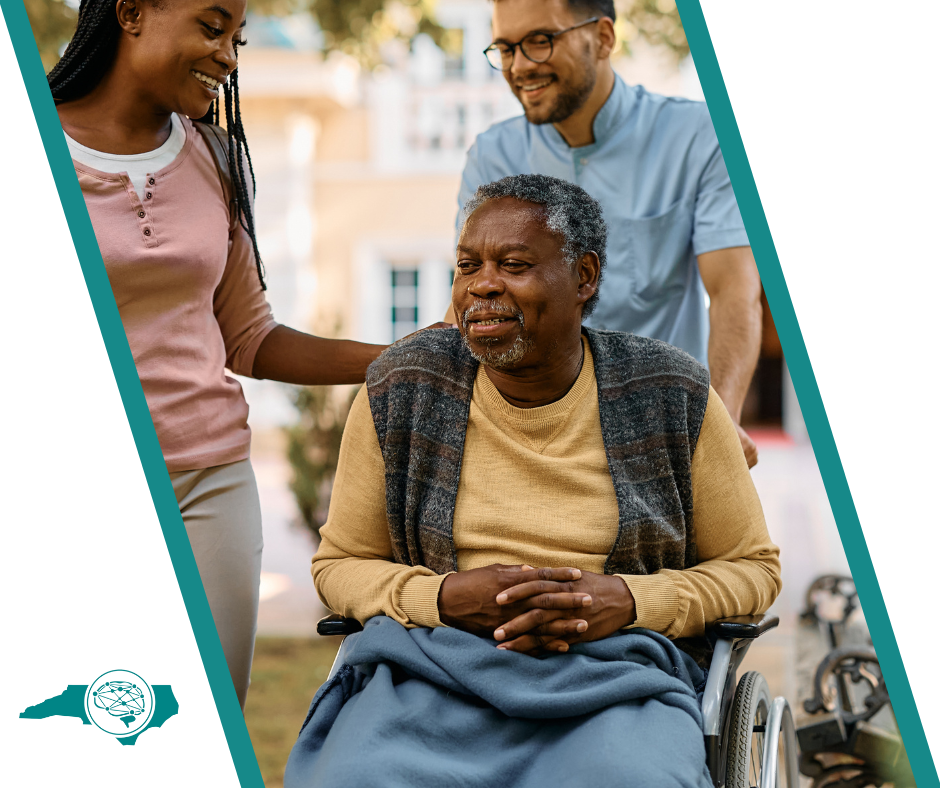
The Two-Way Street of Caregiving

A recent article reminds us that family caregivers experience feelings of chronic stress, exhaustion, and isolation. Recognizing caregiving as both meaningful and demanding can encourage caregivers to seek help and support. 

To read the article, visit this link. You can also access caregiver resources in North Carolina by visiting this link. 

Feb Eblast_Two-Way Street of Caregiving

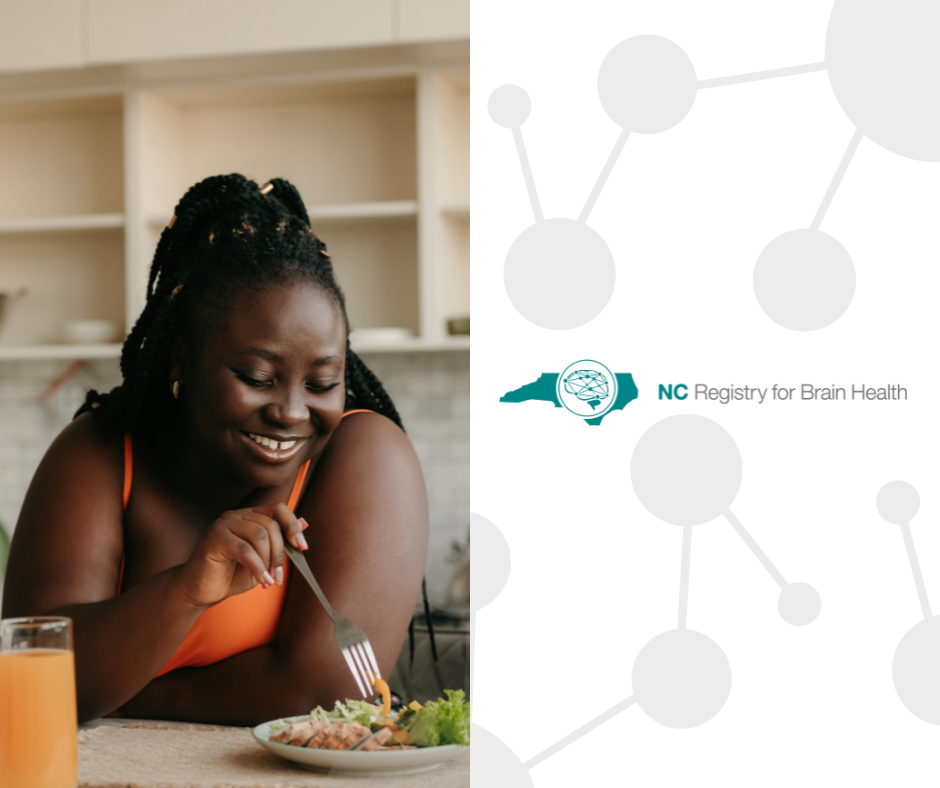
Healthy Eating Promotes Brain Health

A Mediterranean-style diet rich in fruits, vegetables, whole grains, fish, beans, and healthy fats is connected to better brain health. This way of eating can be especially helpful for communities of color, who often experience higher rates of heart and vascular health conditions that can impact the brain. Because this diet can be adapted to many cultural traditions, it offers a flexible and practical way to support both heart and brain health across the lifespan.  

To learn more about the Mediterranean-style diet and its effects on your health, visit the American Heart Association’s website. You can also visit this link to learn more about foods you can eat more regularly to promote brain health. You can take a deeper dive into how diet affects brain health by visiting the American Heart Association’s website. They also have resources to guide you on your healthy eating journey at this link. For healthy recipe ideas, visit this link. 

Feb Eblast_Healthy Eating Promote Brain Health

Caregiving by the Numbers

The 2025 Caregiving in the U.S. Report highlights the growing challenges faced by the nation's 53 million family caregivers, many of whom are supporting loved ones with complex medical, cognitive, and mobility needs. Nearly one in four Americans are caregivers, and in North Carolina, 60% of these caregivers are balancing the demands of providing care while working. The report also confirms what we have been reporting for some time: caregivers are providing more hours of care without enough support, experiencing higher levels of stress, increased financial strain, and declining physical and mental health. Enhancing support for caregivers is vital to the health and well-being of families and communities.

To learn more about this report, visit this link.

Jan Eblast_Caregiving by the Numbers

A Vaccine for Your Brain: Surprising Benefits of the Shingles Shot

A new study offers encouraging news about both brain and immune health. The shingles vaccine, which is already recommended for adults age 50+ to prevent a painful viral infection, may also help lower dementia risk and even slow its progression. Researchers analyzing health data from more than 280,000 older adults in Wales and Australia found that people who received the shingles vaccine were less likely to develop mild cognitive impairment or dementia. Researchers found that, among those already living with dementia, vaccinated individuals had a significantly lower risk of dying over nine years. Scientists believe the vaccine may reduce harmful inflammation in the nervous system or strengthen the immune system, though more research is needed to understand why these benefits occur. While not a guaranteed preventive measure, experts agree that discussing the shingles vaccine with your doctor is a simple, accessible step that may support healthier aging and brain health.

To read more, visit this link.

Jan Eblast_Benefits of the Shingles Shot