
Pace of Aging May Help Predict Risk of Dementia

Researchers have found that some people age slowly, only experiencing a few months’ worth of physical aging in a year, while others age more quickly, in effect, growing years older in just one calendar year. This may help explain why one 50-year-old might appear to be in their 30s while another seems closer to 70. This pace of aging is referred to as biological age which is different than chronological age or number of years a person has been alive.

Duke scientists recently discovered that the pace of aging may also serve as a powerful predictor of an individual’s risk of developing Alzheimer’s disease or other cognitive decline. Read more here
 

Increased Financial Generosity Linked to Lower Cognition

A recent study funded by the National Institute on Aging and conducted at several sites across the U.S. found that increased altruism or willingness to give away money (such as charitable donations) is associated with decreased cognitive function and may be an early indicator of Alzheimer’s disease. Limitations of the study point to the need for further research. Read more here.


NIA Article: Report on New Treatment Option Shown to Reduce Cognitive Decline in Alzheimer’s Study

In January 2023 U.S. Food and Drug Administration (FDA) approved a new treatment option for Alzheimer’s disease called Leqembi (lecanemab-irmb). The FDA accelerated its approval of the medication citing that the category of medications “represents an important advancement in the ongoing fight to effectively treat Alzheimer’s disease”.

Study results showed that lecanemab produced a clear yet modest clinical benefit for people in the early stages of Alzheimer’s. The medication slowed the rate of cognitive decline over 18 months and reduced the levels of brain amyloid when compared to placebo. Learn more in this article from the NIH National Institute on Aging (NIA).


Winter 2023 Newsletter

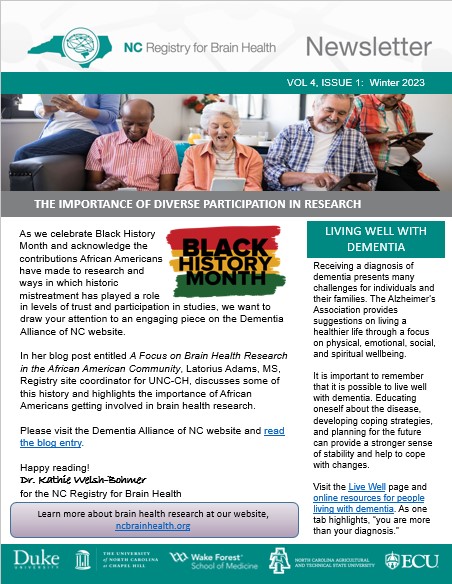
Read the Winter 2023 Newsletter to learn more about the history and importance of African American participation in clinical research. You will also find articles on the importance of taking care of your five senses, study results showing how bilingualism and music may reduce the risk of dementia, helpful resources, and news about upcoming events. Learn more by clicking the link below. Volume 4, Issue 1: Winter 2023