


REFLEXIÓN SOBRE EL AÑO PASADO
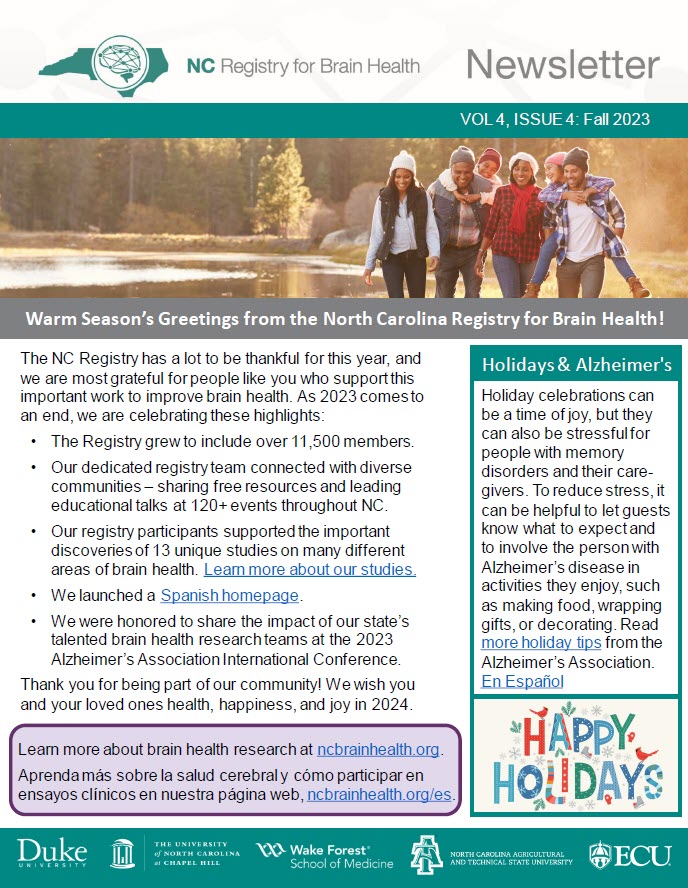
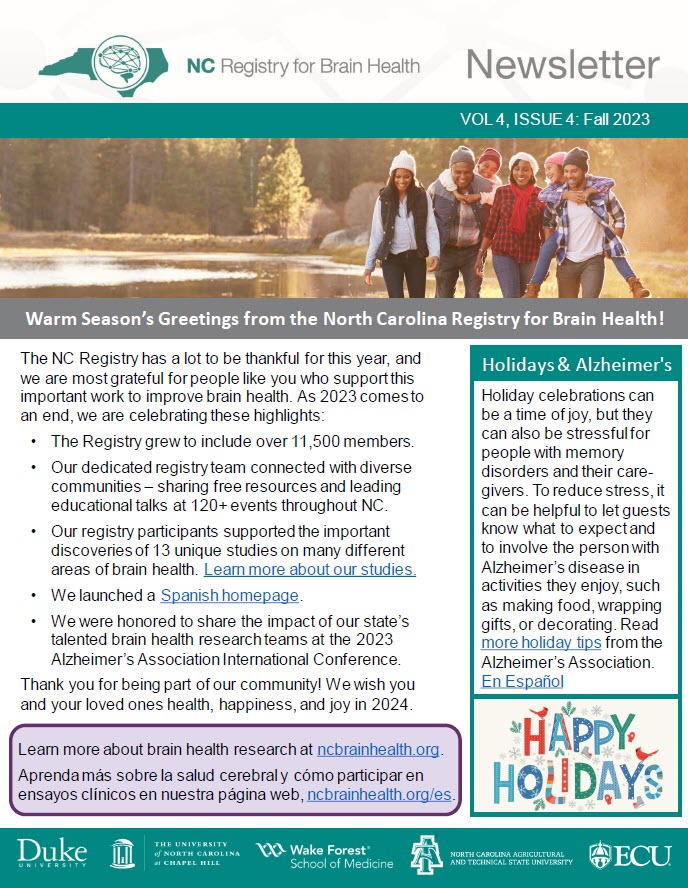
En este boletín informativo, se resumen las noticias compartidas por el Registro de salud cerebral de Carolina del Norte durante el último año. Tenemos muchos logros por celebrar y estamos muy agradecidos con personas como usted que apoyan este importante trabajo de mejorar la salud cerebral. Algunos de los logros del año pasado son:
- El Registro creció y ahora incluye a más de 12,000 miembros.
- Nuestro equipo se conectó con comunidades diversas en más de 130 eventos en Carolina del Norte y dio recursos gratuitos y charlas educativas.
- Miembros del Registro participaron en los descubrimientos importantes de
16 estudios clínicos. Para más información sobre nuestros estudios clínicos, visite ncbrainhealth.org/registry-studies.
Esperamos que la información en este boletín informativo le ayude a aprender más
sobre la salud cerebral (página 2), los estudios clínicos (página 3) y las organizaciones locales que apoyan a las personas con demencia y sus cuidadores (página 4).
¡GRACIAS POR SER PARTE DE NUESTRA COMUNIDAD!
Para recibir noticias mensuales en inglés sobre la salud cerebral, consejos para cuidadores e información sobre actividades para la comunidad, escríbanos a NCBrainHealth@duke.edu o llámenos al (919) 613-8633.
CÓMO MEJORAR LA SALUD CEREBRAL
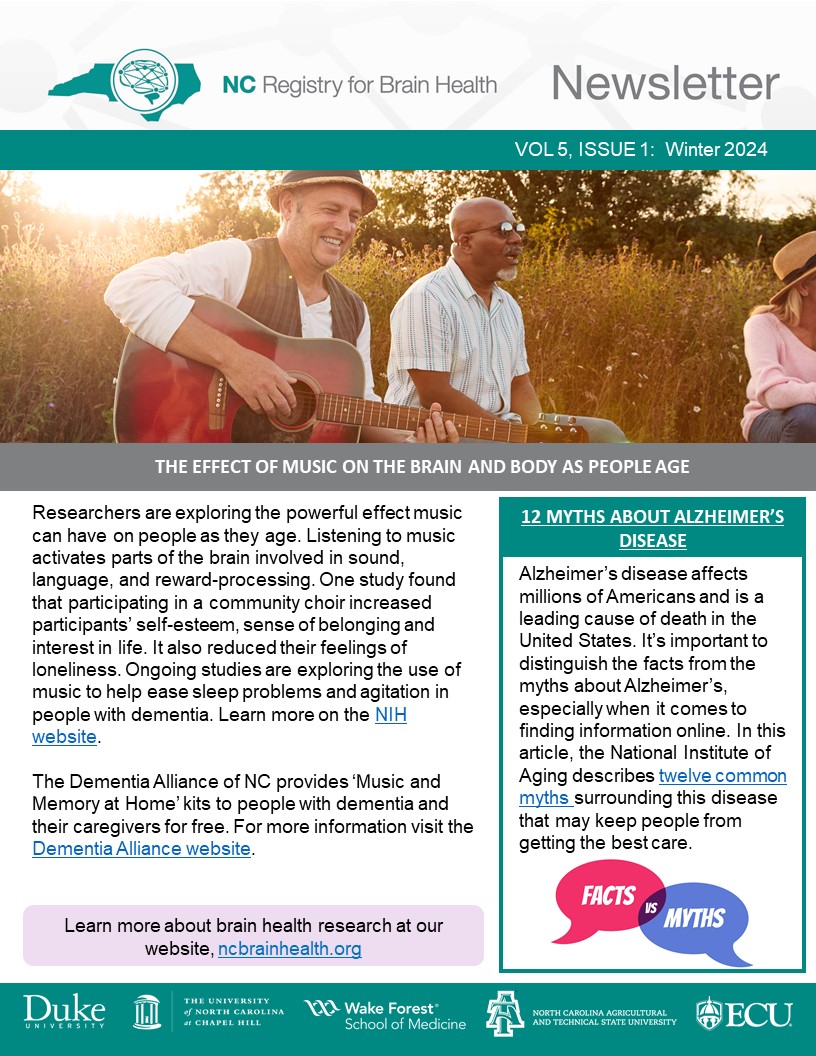
EL EFECTO DE LA MÚSICA EN EL CEREBRO
Escuchar música activa regiones del cerebro que participan en el procesamiento de los sonidos, el lenguaje y la gratificación. En un estudio, se descubrió que participar en un coro comunitario aumentó la autoestima, el sentido de pertenencia y el interés en la vida de los participantes. También redujo los sentimientos de soledad. Otros estudios están explorando el uso de la música para ayudar a aliviar los problemas de sueño y agitación en personas con demencia. Visite bit.ly/music_brain_aging para obtener más información.

CUÍDESE COMO CUIDADOR
Tomarse tiempo para usted puede convertirlo en un mejor cuidador. El Instituto Nacional del Envejecimiento recomienda varias actividades para los cuidadores para mejorar su bienestar, disminuir el estrés y crear una red de apoyo. Reconozca su dedicación y busque ayuda cuando la necesite. Obtenga más información en bit.ly/CaregiversNIA.
Para más información sobre una organización que apoya a cuidadores en Carolina del Norte y da charlas educativas por Zoom en inglés visite dukefamilysupport.org.

DIETAS QUE POSIBLEMENTE DISMINUYEN
En un estudio financiado por el Instituto Nacional del Envejecimiento (National Institute on Aging, NIA), se descubrió que las dietas con alto contenido de verduras, frutas, granos enteros, aceite de oliva, frijoles, frutos secos y pescado pueden ayudar a proteger el cerebro de los efectos de la enfermedad de Alzheimer. El cerebro de los participantes del estudio que consumían dietas con más contenido de verduras de hojas verdes, como espinaca, col rizada y lechuga romana, tenía menos signos de la enfermedad de Alzheimer. Lea más en bit.ly/HealthyFoodsNIA.


CONSEJOS PARA LA SALUD CEREBRAL
En nuestra página web puede explorar más consejos sobre cómo mantener su cerebro sano y su memoria intacta.
Visite ncbrainhealth.org/brain-health-tips para obtener más información.
¿QUÉ SON LOS ESTUDIOS CLÍNICOS?
Los estudios clínicos ayudan a los científicos a encontrar nuevas formas de prevenir, diagnosticar y tratar enfermedades. Muchos tratamientos utilizados en la actualidad no existirían sin voluntarios que participaron en estudios de investigación. Visite bit.ly/NIA-research para obtener más información.
El Registro de Carolina del Norte conecta a personas con estudios clínicos sobre diferentes aspectos de la salud cerebral. Para obtener más información sobre estos estudios y participar, visite ncbrainhealth.org/registry-studies, escríbanos a ncbrainhealth@duke.edu o llámenos al (919) 613-8633.

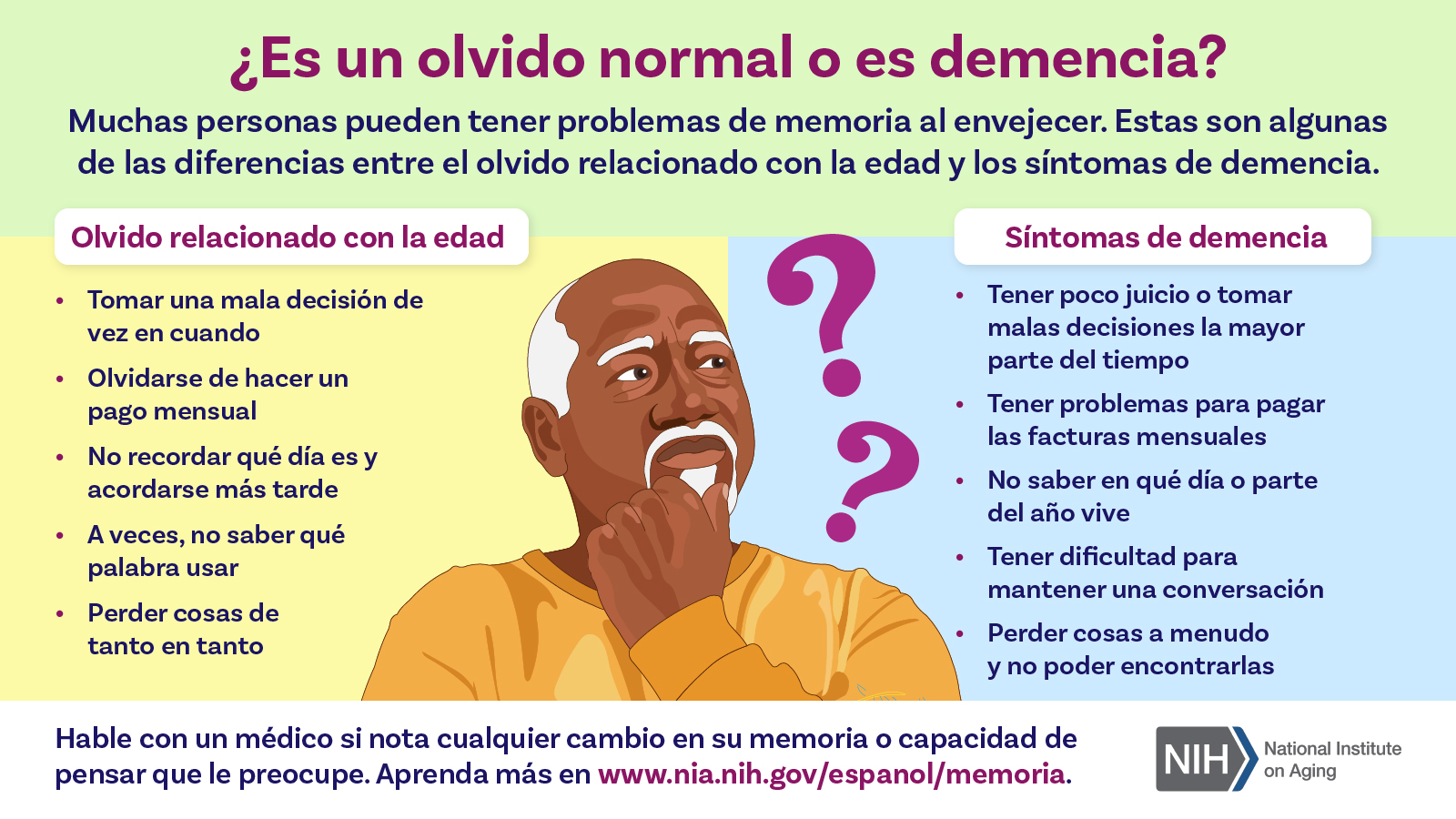
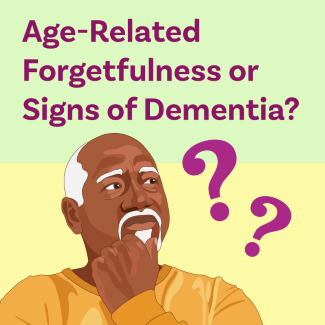
¿QUÉ TIPO DE OLVIDOS SON NORMALES Y CUÁLES NO LO SON?
Olvidar un nombre ocasionalmente o dónde dejó algo puede ser parte del proceso normal de envejecimiento. Pero si esto sucede con frecuencia y también se observan otros cambios, como olvidar qué día o qué hora del año es o tener problemas para hablar con alguien, puede ser un signo de problemas de memoria más graves. Visite bit.ly/NIA-Aging para obtener información sobre el proceso normal de envejecimiento y los signos de deterioro cognitivo leve, la enfermedad de Alzheimer y otras formas de demencia.
El Registro de salud cerebral conecta a personas con estudios clínicos sobre diferentes aspectos de la salud cerebral. Dos de los estudios clínicos están disponibles en español:
Latinos, Memoria y Pensamiento (LAMP)
LAMP es un estudio clínico que busca entender cómo las personas que hablan español y viven en los Estados Unidos se desempeñan en las pruebas de memoria y otras habilidades del pensamiento. Si tiene entre 60 y 85 años, habla español y es hispano/a o latino/a, es posible que pueda participar.
Estudio de prevención de la demencia - PREVENTABLE
PREVENTABLE es un estudio clínico que está investigando si tomar un medicamento para el corazón de uso común llamado estatina podría ayudar a prevenir la demencia en personas de 75 años o más.
Para obtener más información sobre estos estudios clínicos y los que están disponibles en inglés, visite ncbrainhealth.org/registry-studies, escríbanos a ncbrainhealth@duke.edu o llámenos al (919) 613-8633.
DÓNDE ENCONTRAR AYUDA
La página web del Registro de Carolina del Norte contiene una lista de organizaciones y programas de apoyo para las personas con demencia y sus cuidadores. Comuníquese con cada organización para obtener más información sobre sus programas y eventos en ncbrainhealth.org/resources.
Asociación de Alzheimer
Proporciona información y apoyo para las personas con Alzheimer y sus seres queridos.
Sitio web: ALZ.org
Línea de ayuda las 24 horas del día, los
7 días de la semana: (800) 272-3900
Alianza para la Demencia de Carolina del Norte
Ofrece apoyo compasivo a aquellos que viven con demencia o a quienes cuidan de personas con demencia.
Sitio web: DementiaNC.org
Teléfono: (919) 832-3732
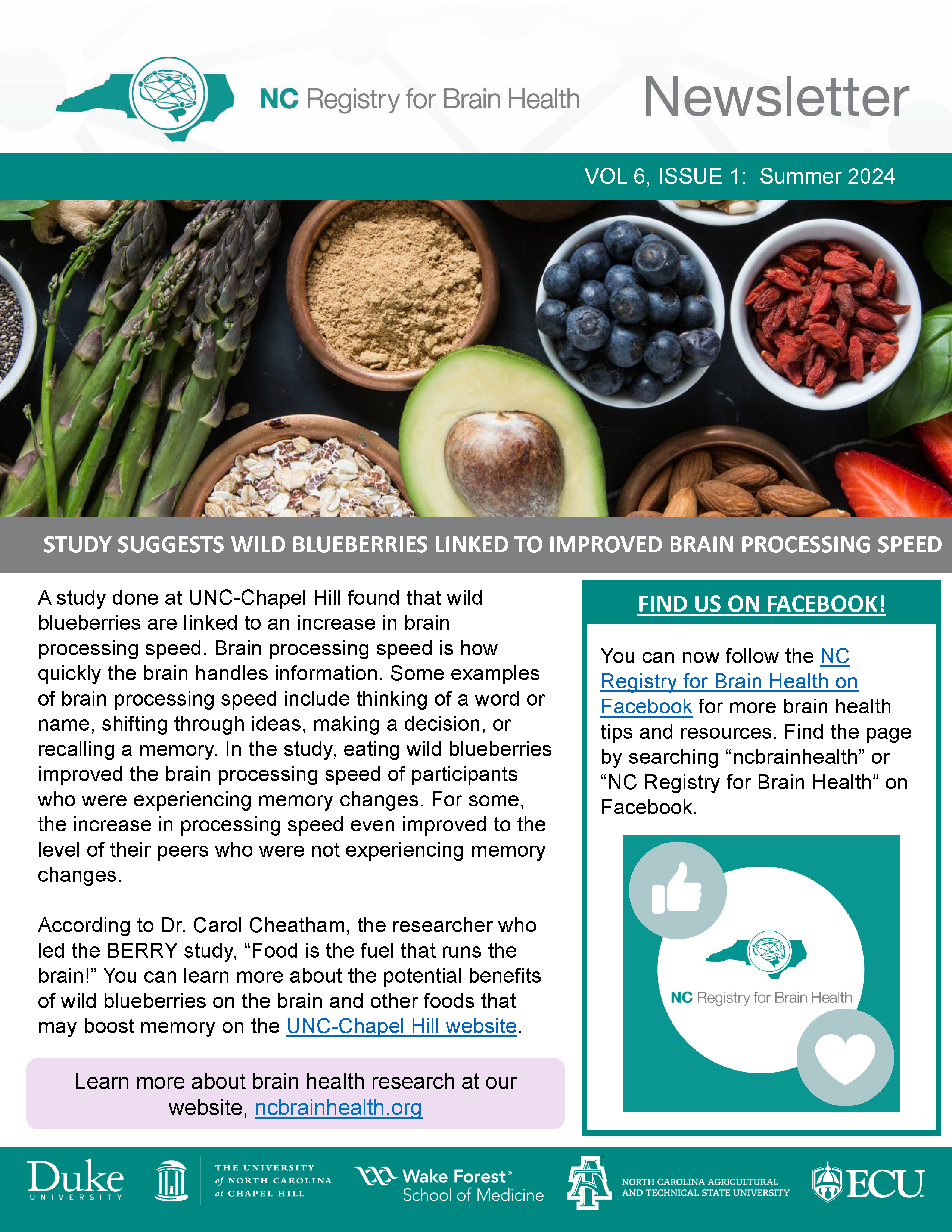
 ¡ENCUÉNTRENOS EN FACEBOOK!